
How to Choose a Developmental Editor for Fantasy or Sci-Fi
Finishing a fantasy or sci-fi draft is a brilliant feat. You’ve survived the long trek to The End, and then you’re faced with a new challenge: how to find the right developmental editor.
Speculative fiction has rules, magic systems, logic, myth, science… it involves masterful narrative engineering. When something’s off, a mistake can transport readers right out of your story.
The good news is that choosing a developmental editor doesn’t have to be complicated. You just need to know what you’re looking for and what you’re not.
Let’s review:
What does a developmental editor do?
What deliverables will you get with a developmental edit?
Do you need a specialised editor for speculative fiction?
Quick Pre-Booking Checklist
What does a developmental editor do?
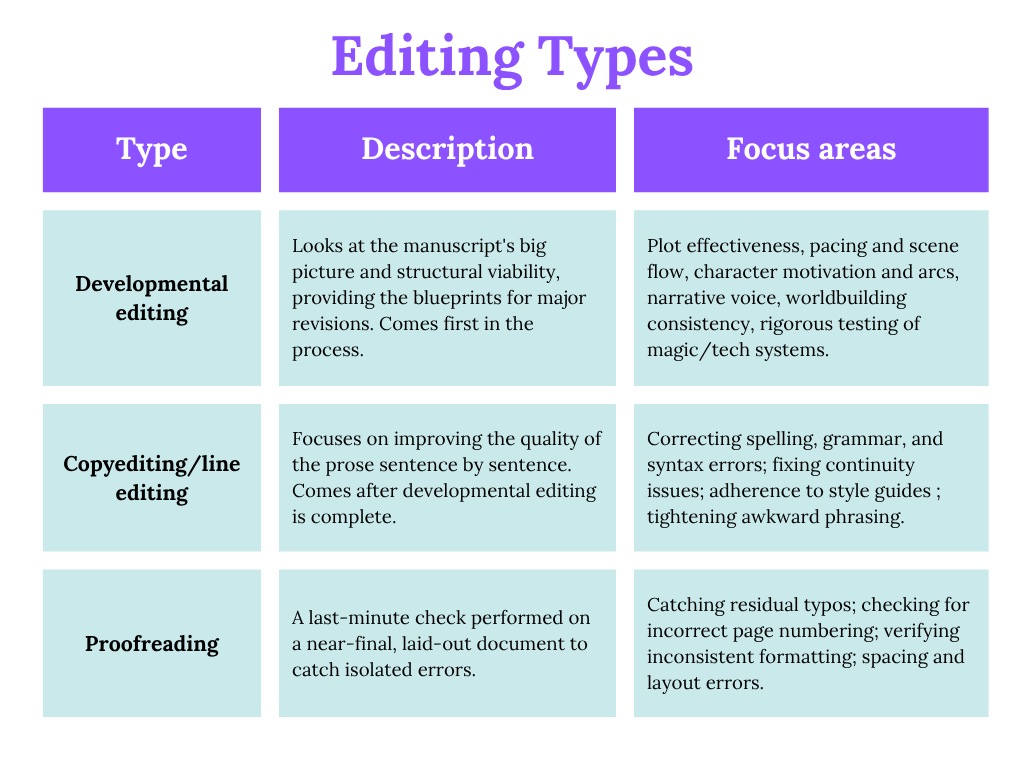
A developmental editor helps you strengthen the big-picture foundations of your manuscript. Think of them as the person who checks whether the story actually works as a story (not whether your commas are in the right place; that’s a copy-editor’s job!).
A developmental editor looks at things like:
Plot structure: Does the story build logically? Does the tension build?
Pacing: Where does the story drag or rush?
Character arcs: Do their choices feel well-earned?
Worldbuilding integration: Does the world serve the story (not smother it)?
Theme and cohesion: Do all the moving parts feel like they belong together?
Reader experience: Where will a real reader get confused or bored?
Remember that a developmental editor does not rewrite your book for you. They highlight where you could amend big-picture elements, and work collaboratively with you to mould your story.
What deliverables will you get with a developmental edit?
The exact deliverables you’ll receive vary between professionals, which is normal. So, let’s use EV Editing as an example. With my developmental editing services, you get:
In-manuscript comments left throughout the document.
An editorial assessment, which is an analysis of your novel spanning thousands of words. Yep, very detailed support to guide you!
A V2 edit, aka I will review your revised manuscript to check you’ve hit all the identified points.
A halfway point update letting you know how I’m getting on when I reach – you guessed it – the halfway point in the novel.
A post-edit debrief call to discuss the next steps in your self-publishing journey.
Do you need a specialised editor for speculative fiction?
If you want the best possible edit, then it’s an good idea to choose a genre-specific editor.
Speculative fiction has structural demands that general fiction editing doesn’t always cover. A generalist editor might still be brilliant at their job, but they may not know how to navigate the core challenges of speculative fiction, such as worldbuilding and magic systems logic.
Let’s look at some examples of why worldbuilding and magic systems really matter in subgenres like fantasy and sci-fi:
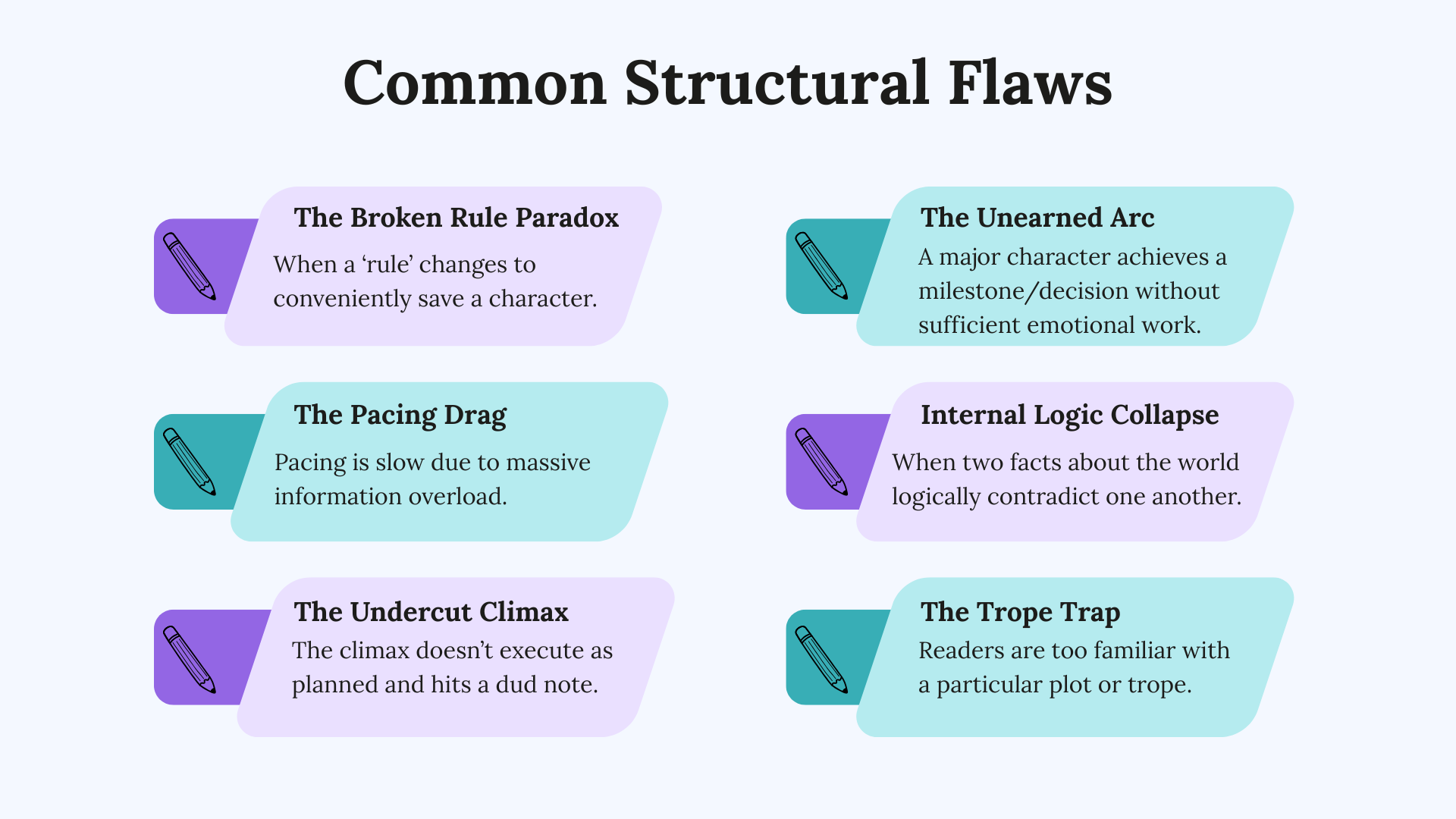
Example 1: Speculative fiction audiences are good at noticing contradictions. If your magic can heal fatal wounds in Chapter 3 but can’t treat a minor injury in Chapter 19, your readers will spot the inconsistency and switch off.
Example 2: If your society is built on strict class rules, those rules should shape what your characters can and can’t do. If your alien culture values collectivism over individuality, your characters’ choices should reflect this.
8 Things to Look For Choosing a Developmental Editor for Speculative Fiction
Knowing whether an editor is a good fit can come down to emotional connection and intuition. But, if you’d rather take a structured and pragmatic approach to finding the right developmental editor, here are some great traits to look for.
They Can Explain Their Process Clearly
You should never feel like you’re buying a mystery box. If the process sounds vague or overcomplicated, that’s a red flag. A good dev editor will tell you:
What deliverables you will receive
Realistic timelines and deadlines
What kind of feedback style they use
The cost
What happens after the edit
What to Ask the Editor
“Can you walk me through your developmental editing process step by step, and what I’ll receive at the end?”
2. They are Confident About What They Don’t Do
Great editors have boundaries. They won’t promise to fix your book in a day or make you an NYT bestseller. Instead, they’ll approach the project with respect for your work, providing honest and practical structural feedback.
What to Ask the Editor
“What’s included in your developmental edit?”
3. They Understand Your Subgenre’s Reader Expectations
Fantasy and sci-fi are umbrella terms for huge genres, and you’ve got all sorts of granular subgenres underneath them. Each (sub)genre has its own complexities; pacing norms of cosy fantasy aren’t the same as military sci-fi or romantasy.
A good spec-fic editor can talk about things like market conventions and what readers of your subgenre love, which means they’ll balance their subjective opinion with an objective measure of success.
What to Ask the Editor
“What pitfalls do you often see in X genre?”
4. Their Feedback Style Matches Your Preference
Some editors are blunt. Some are gentle. Some leave 1000 comments; some focus on a cleaner roadmap.
Not a single one of these approaches is wrong; it just depends on what you like. If you shut down under very direct feedback, choose someone who’s constructive and motivating. If you want ruthless clarity, choose someone who gives it.
What to Ask the Editor
“How would you describe your feedback style, and can I see a sample of your in-manuscript comments?”
5. They Focus on Root Causes, Not Random Cosmetic Fixes
A speculative fiction developmental editor’s job isn’t just to point out missteps like slow pacing in early chapters or information dumps. Their role is to find the cause beneath the symptom, kind of like your novel’s doctor.
For example, pacing issues might come from a lack of escalation during the scene. Or, worldbuilding contradictions might be a theme or timeline issue.
What to Ask the Editor
“When you notice a problem like pacing or info-dumping, how do you figure out what’s causing it underneath?”
6. They See Your Vision
You don’t need an editor who writes exactly like you. You want one who’s excited about your novel and who sees your vision for all its components: your characters, world, goals, narrative voice and everything else. If they seem indifferent to speculative fiction, you’ll feel it in the edit.
What to Ask the Editor
“Do I need to provide any information to help you understand my novel and goals?” (At EV Editing, I’ll provide you with a Pre-Edit Questionnaire so I can do a deep-dive on your novel before we even begin.)
7. They Won’t Try to Flatten Your Voice
A good editor will challenge choices while respecting your intent and narrative voice. Both parties meet in the middle; a dev editor should never try to turn your book into theirs.
What to Ask the Editor
“What happens if I disagree with the feedback?”
8. You Feel Comfortable Asking ‘Silly’ Questions
You’re handing over a whole invented universe. If you can’t be honest about your uncertainties, the collaboration won’t work. You want an editor who fosters a collaborative and creative environment for experimentation and idea sharing, making you feel respected and supported.
What to Ask the Editor
“How do you like authors to communicate during the edit, and what does collaboration look like for you?”
Quick Pre-Booking Checklist
Before you sign anything, make sure you can answer yes to these:
I understand their dev edit process and deliverables
They work in fantasy/sci-fi and get my subgenre
Their feedback style fits me
I’ve seen a sample of their work
They respect your author agency
I feel comfortable talking to them
Final Thoughts…
Choosing a developmental editor for speculative fiction isn’t about finding the best editor on the internet (who probably doesn’t exist…). It’s about finding the best editor for your book and goals.
The right dev editor will help you turn a strong draft into a cohesive, publish-ready story and make sure you feel supported every step of the way.
If you’d like to see whether I’m the right fit for your fantasy or sci-fi manuscript, you can explore my developmental editing services or get in touch for a no-pressure chat. I’d love to hear about the worlds you’re crafting.